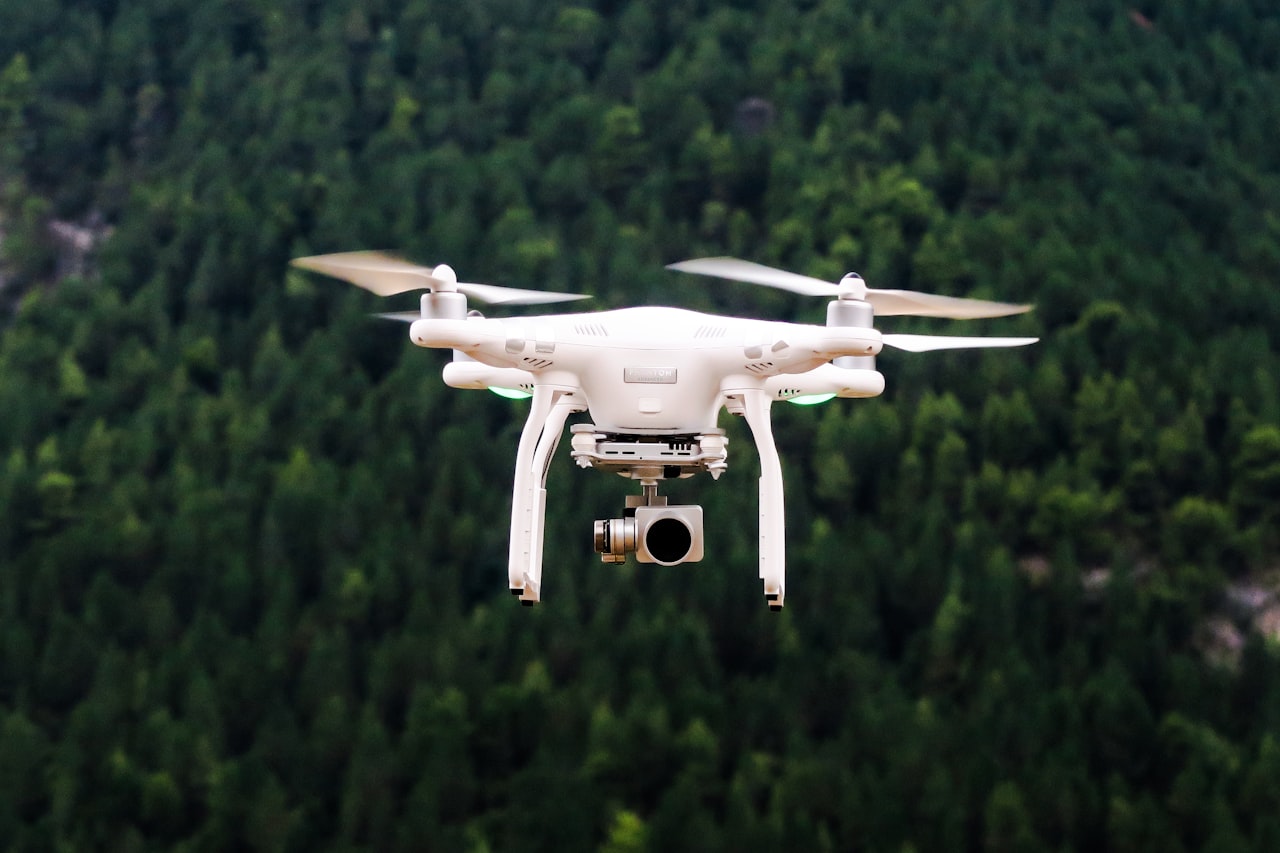
The drone procurement landscape for U.S. government and defense customers has shifted dramatically over the past three years. What was once a market dominated by low-cost foreign platforms — primarily from Chinese manufacturers — is now subject to sweeping restrictions, framework requirements, and active Congressional pressure to source domestically.
For procurement teams, understanding this landscape is no longer optional. It is a compliance requirement.
The Legislative Foundation
The National Defense Authorization Act has been the primary vehicle for restricting foreign UAS procurement. Section 848 of the FY2020 NDAA prohibited Department of Defense components from using funds to procure UAS manufactured in covered foreign countries — a list that prominently includes China.
Subsequent NDAAs have expanded and tightened these restrictions year over year. The FY2023 NDAA introduced provisions requiring DoD to develop a strategy for transitioning to domestically produced UAS, while also strengthening reporting requirements for any waivers granted.
The practical effect: any UAS platform in DoD supply chains must now be traceable to a non-covered-country manufacturer, with documentation to support that claim.
The Blue UAS Framework
The Defense Innovation Unit developed the Blue UAS framework as a direct response to the legislative environment. The program evaluates commercial off-the-shelf drone platforms for security, functionality, and supply chain integrity, and publishes a cleared list that defense and federal agencies can procure from with confidence.
Getting onto the Blue UAS cleared list is not trivial. It requires hardware teardown analysis, software security audits, and ongoing compliance monitoring. Platforms that pass are explicitly vetted for use in sensitive environments.
VST drone platforms are built from the ground up with Blue UAS compliance requirements in mind. Every component in our supply chain is documented, and our manufacturing takes place entirely in the United States.
DHS and the Civilian Agency Picture
The Department of Homeland Security followed DoD’s lead with its own UAS restriction guidance, effectively prohibiting DHS components from operating platforms with ties to certain foreign manufacturers. CBP, ICE, and USCG have all had to audit and in many cases retire existing drone fleets as a result.
For civilian federal agencies, the picture is less prescriptive but trending in the same direction. GSA schedule vehicles now carry clear guidance favoring domestically manufactured UAS, and several agencies have adopted internal policies mirroring the DoD restrictions ahead of formal regulatory requirements.
What This Means for Procurement Teams
If you are responsible for UAS acquisition at a federal, state, or critical infrastructure level, here is the practical checklist:
Verify country of origin for all major components. Flight controllers, cameras, data links, and processors each carry their own supply chain risk. A drone assembled in the U.S. using foreign-manufactured core components may not meet the full intent of NDAA restrictions.
Require documentation, not assurances. Any reputable domestic manufacturer should be able to provide component-level country of origin documentation. If a vendor cannot produce this, treat it as a red flag.
Understand your acquisition vehicle options. DoD components can use OTA agreements for rapid UAS acquisition. Civilian agencies should look at GSA Schedule 84 for law enforcement and security products. Both paths are available for domestically manufactured platforms.
Plan for fleet transition timelines. If your organization is operating foreign-manufactured platforms currently, begin transition planning now. Waivers are available but are time-limited and increasingly difficult to obtain as the regulatory pressure intensifies.
The VST Position
Every Vigilant Sky Technologies drone platform — the VST-05, VST-07, and VST-15 — is manufactured in the United States using a supply chain we have audited and documented. We exist specifically to serve customers who need verifiable American-made UAS with no ambiguity about where the hardware comes from or where the data goes.
We are happy to provide full component-level documentation for any platform in our lineup. Contact our procurement team to begin a conversation.